The man behind the masks
Who was William Walker Atkinson?
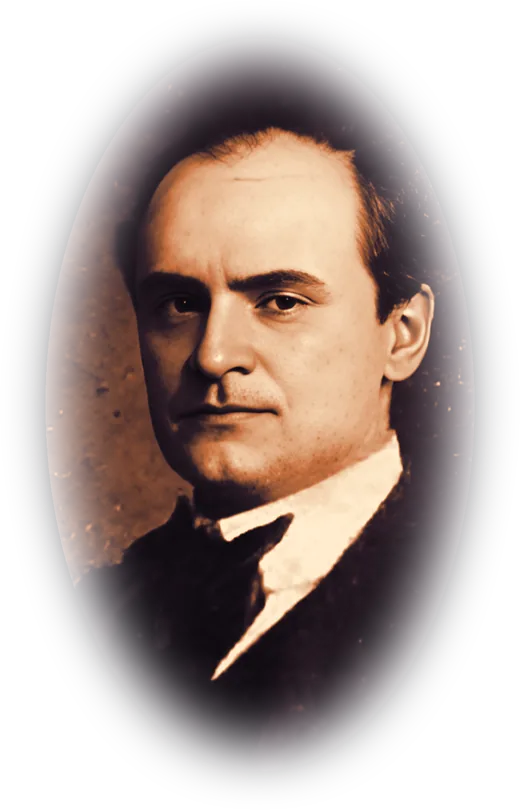
William Walker Atkinson (1862 to 1932) was a Pennsylvania lawyer who became a Chicago writer, editor and publisher of New Thought, the movement that taught the mind can shape health and success. By most counts he wrote about a hundred books, many under pen names such as Yogi Ramacharaka, Theron Q. Dumont and, almost certainly, the “Three Initiates” of The Kybalion. In 1906, under his own name, he published Thought Vibration, one of the first full guides to the law of attraction. The finder below unmasks 84 of his books, every one we could date and source.
Contents
Every page in this section
The free books
Where the books lead
- 04Is The Kybalion actually Hermetic?Each of its seven axioms checked against the ancient Hermetica, the Emerald Tablet and his own 1906 book.
- 05Is the Law of Attraction real?What the studies say about the idea Thought Vibration put into print.
- 06What are the 7 Hermetic Principles?All seven, word for word, and which ones have real Hermetic roots.
- 07What does the Emerald Tablet actually say?The short alchemy text behind “as above, so below,” line by line.
- 08Did Hermes Trismegistus actually exist?The sage The Kybalion is dedicated to, and who really wrote the books in his name.
The finder
Who really wrote it?
Atkinson put at least ten different names on his covers, and some books carry no name at all. Every dot is one book, placed by the year it first came out and the name on its cover. Type a title, tap a name, or pick a dot to see who really wrote it.
Each ring is a name on the cover. Around the clock, the years 1900 to 1925.
Every book in the finder, as a list
| Year | Title | Name on the cover |
|---|---|---|
| 1900 | Thought-Force in Business and Everyday Life | William Walker Atkinson |
| 1902 | Nuggets of the New Thought | William Walker Atkinson |
| 1902 | The Law of the New Thought | William Walker Atkinson |
| 1903 | Fourteen Lessons in Yogi Philosophy and Oriental Occultism | Yogi Ramacharaka |
| 1903 | Memory Culture | William Walker Atkinson |
| 1903 | The Hindu-Yogi Science of Breath | Yogi Ramacharaka |
| 1904 | Advanced Course in Yogi Philosophy and Oriental Occultism | Yogi Ramacharaka |
| 1904 | Hatha Yoga | Yogi Ramacharaka |
| 1906 | Dynamic Thought | William Walker Atkinson |
| 1906 | Gnani Yoga | Yogi Ramacharaka |
| 1906 | Raja Yoga | Yogi Ramacharaka |
| 1906 | The Science of Psychic Healing | Yogi Ramacharaka |
| 1906 | Thought Vibration · free here | William Walker Atkinson |
| 1907 | Mental Fascination | William Walker Atkinson |
| 1907 | Mystic Christianity | Yogi Ramacharaka |
| 1907 | Practical Mind-Reading | William Walker Atkinson |
| 1907 | Practical Psychomancy and Crystal Gazing | William Walker Atkinson |
| 1907 | Self-Healing by Thought Force | William Walker Atkinson |
| 1907 | The Bhagavad Gita, or The Message of the Master | Yogi Ramacharaka |
| 1907 | The Law of Financial Success | Edward E. Beals (attributed) |
| 1907 | The Secret of Mental Magic | William Walker Atkinson |
| 1907 | The Spirit of the Upanishads | Yogi Ramacharaka |
| 1908 | Mind-Power | William Walker Atkinson |
| 1908 | Practical Mental Influence | William Walker Atkinson |
| 1908 | Reincarnation and the Law of Karma | William Walker Atkinson |
| 1908 | The Inner Consciousness | William Walker Atkinson |
| 1908 | The Inner Teachings of the Philosophies and Religions of India | Yogi Ramacharaka |
| 1908 | The Kybalion · free here | Three Initiates (attributed) |
| 1908 | The Secret of Success | William Walker Atkinson |
| 1909 | Cosmic Law | No name |
| 1909 | Memory: How to Develop, Train, and Use It | William Walker Atkinson |
| 1909 | Suggestion and Auto-Suggestion | William Walker Atkinson |
| 1909 | The Arcane Formulas, or Mental Alchemy | No name |
| 1909 | The Arcane Teaching | No name |
| 1909 | The Art of Logical Thinking | William Walker Atkinson |
| 1909 | The Hindu-Yogi Practical Water Cure | Yogi Ramacharaka |
| 1909 | The Life Beyond Death | Yogi Ramacharaka |
| 1909 | The Mystery of Sex, or Sex Polarity | No name |
| 1909 | The New Psychology | William Walker Atkinson |
| 1909 | The One and the Many | No name |
| 1909 | The Psychic Planes | No name |
| 1909 | The Subconscious and the Superconscious Planes of Mind | William Walker Atkinson |
| 1909 | The Will | William Walker Atkinson |
| 1909 | Thought-Culture | William Walker Atkinson |
| 1909 | Thoughts Are Things | Edward Walker |
| 1910 | How to Read Human Nature | William Walker Atkinson |
| 1910 | Mind and Body | William Walker Atkinson |
| 1910 | Scientific Parenthood | William Walker Atkinson |
| 1910 | Telepathy | William Walker Atkinson |
| 1910 | The Art of Expression | William Walker Atkinson |
| 1910 | The Crucible of Modern Thought | William Walker Atkinson |
| 1910 | The Psychology of Salesmanship | William Walker Atkinson |
| 1910 | The Psychology of Success | William Walker Atkinson |
| 1911 | The Mastery of Being | William Walker Atkinson |
| 1911 | The Message of the New Thought | William Walker Atkinson |
| 1911 | Vril, or Vital Magnetism | No name |
| 1911 | Your Mind and How to Use It | William Walker Atkinson |
| 1912 | The Human Aura | Swami Panchadasi |
| 1913 | The Art and Science of Personal Magnetism | Theron Q. Dumont |
| 1913 | Vim Culture | Theodore Sheldon (attributed) |
| 1914 | The Advanced Course in Personal Magnetism | Theron Q. Dumont |
| 1915 | The Astral World | Swami Panchadasi |
| 1915 | The Development of Seership | Swami Bhakta Vishita |
| 1916 | Clairvoyance and Occult Powers | Swami Panchadasi |
| 1916 | Mental Therapeutics | Theron Q. Dumont |
| 1916 | Practical Memory Training | Theron Q. Dumont |
| 1916 | The Power of Concentration · free here | Theron Q. Dumont |
| 1918 | The Master Mind | Theron Q. Dumont |
| 1918 | The Secret Doctrine of the Rosicrucians | Magus Incognito |
| 1919 | Genuine Mediumship | Swami Bhakta Vishita |
| 1920 | The Solar Plexus or Abdominal Brain | Theron Q. Dumont |
| 1922 | Character Power | William Walker Atkinson with Edward E. Beals |
| 1922 | Creative Power | William Walker Atkinson with Edward E. Beals |
| 1922 | Desire Power | William Walker Atkinson with Edward E. Beals |
| 1922 | Faith Power | William Walker Atkinson with Edward E. Beals |
| 1922 | Perceptive Power | William Walker Atkinson with Edward E. Beals |
| 1922 | Personal Power | William Walker Atkinson with Edward E. Beals |
| 1922 | Reasoning Power | William Walker Atkinson with Edward E. Beals |
| 1922 | Regenerative Power | William Walker Atkinson with Edward E. Beals |
| 1922 | Spiritual Power | William Walker Atkinson with Edward E. Beals |
| 1922 | Subconscious Power | William Walker Atkinson with Edward E. Beals |
| 1922 | The Inner Secret | X. |
| 1922 | Thought Power | William Walker Atkinson with Edward E. Beals |
| 1922 | Will Power | William Walker Atkinson with Edward E. Beals |
The free editions
Three of his books, redesigned and free
-
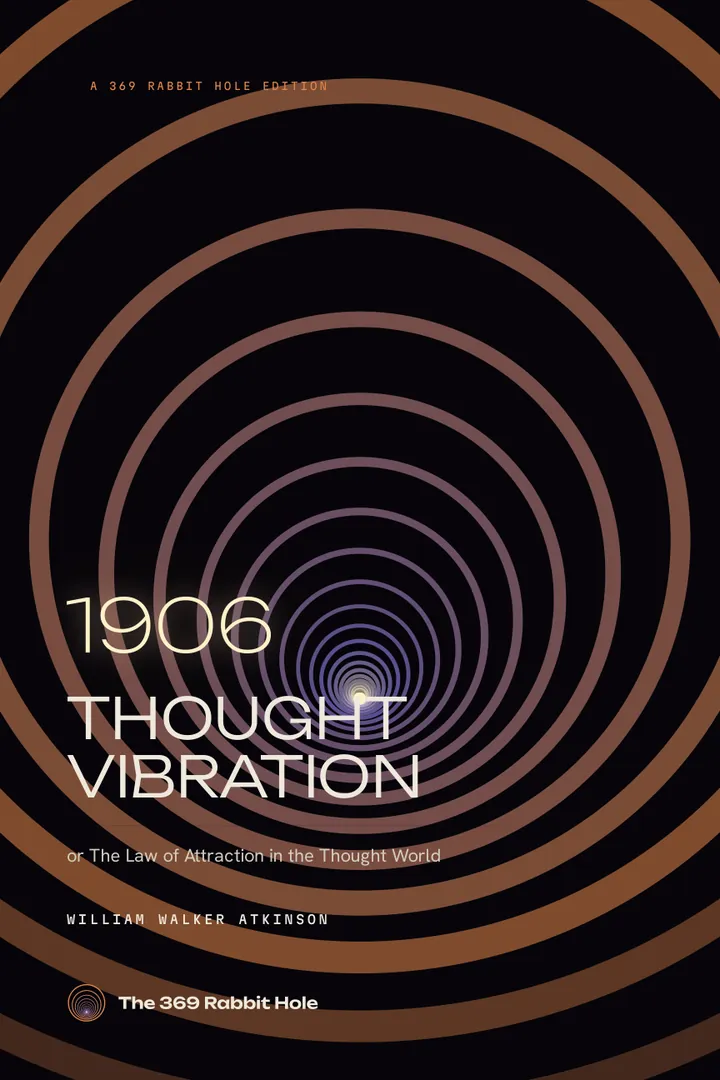
Book 01 · 1906 · his own name
Thought Vibration
His law of attraction book: 16 plain-spoken lessons on fear, habit, desire and will, first written for New Thought magazine. 92 pages.
-

Book 02 · 1908 · as “Three Initiates”
The Kybalion
The seven “Hermetic” principles, from “THE ALL is MIND” to Gender, presented as the ancient wisdom of Egypt. 118 pages.
-
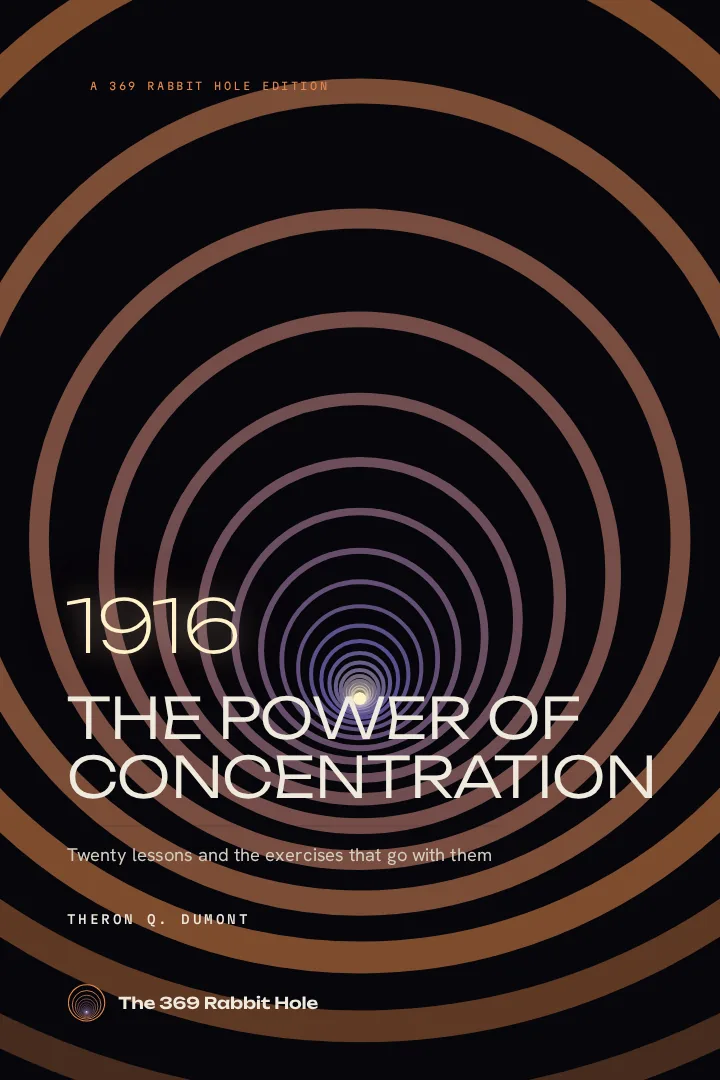
Book 03 · 1916 · as Theron Q. Dumont
The Power of Concentration
Twenty lessons on holding the mind on one thing, with nineteen practical exercises, from sitting perfectly still to following the second hand of a clock. 139 pages.
His life
His life in nine dates
- 1862
Born in Baltimore
December 5, the son of William and Emma Atkinson. He went into business young and stayed in commercial life from 1882 to 1894.
- 1894
A lawyer, then a breakdown
He was admitted to the Pennsylvania bar. Overwork brought, in one account, “a complete physical and mental breakdown, and financial disaster.” He credited his recovery to New Thought.
- 1900
Chicago
Associate editor of the Chicago magazine Suggestion. In December he signed the preface of his first book, Thought-Force in Business and Everyday Life.
- 1901
Editor of New Thought
He took over the magazine New Thought in December. Its circulation went from about 4,500 to more than 100,000, and his lessons there became Thought Vibration.
- 1903
Yogi Ramacharaka appears
The first Ramacharaka books come out from the Yogi Publication Society, starting with The Hindu-Yogi Science of Breath. The same year he joins the Theosophical Society and is admitted to the Illinois bar.
- 1906
Thought Vibration
Under his own name, Thought Vibration, or the Law of Attraction in the Thought World.
- 1908
The Kybalion
The Yogi Publication Society prints The Kybalion, signed “Three Initiates.” In 1912 Atkinson lists it among his unsigned books in Who’s Who in America.
- 1916
Advanced Thought
He edits the magazine Advanced Thought until 1919. Its publisher, at the same Chicago address as the Yogi Publication Society, issues the books of Theron Q. Dumont, Swami Panchadasi and Swami Bhakta Vishita.
- 1932
Dies in California
November 22, at home in Pasadena, by a local paper of the time. His last Who’s Who entry gives his home as Arcadia, California.
The pen names
Why so many names?
Atkinson wrote for several markets at once, and each one got its own author. Yoga and Indian philosophy came from “Yogi Ramacharaka.” Personal magnetism and concentration came from “Theron Q. Dumont,” billed as an instructor in Paris. Clairvoyance and the astral world came from two swamis. Hermetic philosophy came from “Three Initiates.”
He never hid all of it. His entries in Who’s Who in America list The Kybalion and the unsigned Arcane Series as his own, and say he wrote “a number of other books under various pseuds.” The only pen name he ever named there was Yogi Ramacharaka. The Ramacharaka books credited their teaching to an Indian master, Baba Bharata. No record of either man has been found.
Two of his publishing houses, the Yogi Publication Society and the Advanced Thought Publishing Company, printed the same Chicago address on their title pages: 168 North Michigan Avenue.
Yoga, breathing, Indian philosophy and religion. The one pen name he admitted in Who’s Who.
The Kybalion. He listed it among his own unsigned books.
Personal magnetism, concentration, memory and will, billed as the work of an instructor in Paris.
The human aura, the astral world and clairvoyance.
Seership and mediumship, signed as a “Hindoo Master.”
The Secret Doctrine of the Rosicrucians.
Thoughts Are Things, which he listed as his own.
Hermetic teaching with no author named. He claimed the series in Who’s Who.
Named on The Law of Financial Success and as co-author of the twelve Personal Power books. He may have been a real partner or another pen name.
Vim Culture. A 1925 letter suggests Sheldon was a real person.
The Inner Secret, which Who’s Who credits to Atkinson with Edward E. Beals.
Pieces in Advanced Thought magazine. No books.
Real vs legend
Atkinson, sorted
| Claim | Status |
|---|---|
| He wrote about a hundred books. | Roughly · counts run from 50 to 105 |
| He was Yogi Ramacharaka. | Real · his own Who’s Who entries |
| Yogi Ramacharaka was a real Indian teacher. | Legend · no record of him |
| He wrote The Kybalion. | Near certain · Who’s Who, 1912 to 1913 |
| Theron Q. Dumont taught in Paris. | Legend · a Chicago pen name |
| He was a lawyer. | Real · Pennsylvania bar, 1894 |
| He was a Freemason. | No evidence · no lodge in any Who’s Who entry |
| His books are free to read and share. | Real · public domain in the US |
Questions
William Walker Atkinson
Who was William Walker Atkinson?
An American lawyer turned writer, editor and publisher (1862 to 1932) who was a leading figure of the New Thought movement in Chicago. By most counts he wrote about a hundred books under his own name and many pen names, including Thought Vibration (1906) and, almost certainly, The Kybalion (1908).
What pen names did William Walker Atkinson use?
Yogi Ramacharaka, Theron Q. Dumont, Swami Panchadasi, Swami Bhakta Vishita, Magus Incognito, Edward Walker and the “Three Initiates” of The Kybalion. Some books carried no name at all, and the bylines Theodore Sheldon and Edward E. Beals are disputed.
Did William Walker Atkinson write The Kybalion?
Almost certainly. The book is signed “Three Initiates,” but Atkinson listed it among his unsigned works in Who’s Who in America in 1912 to 1913 and in every later edition. The scholar Philip Deslippe and the historian Mitch Horowitz both credit him as its author.
How many books did William Walker Atkinson write?
Counts run from more than 50 to 105 titles, and about 100 is the usual figure. Our finder holds 84 books we could date and source, published from 1900 to 1922.
Which William Walker Atkinson book should I read first?
For the law of attraction, Thought Vibration (1906). For the Hermetic principles, The Kybalion (1908). For focus, The Power of Concentration, written as Theron Q. Dumont. For breathing and yoga, The Hindu-Yogi Science of Breath, written as Yogi Ramacharaka.
Was William Walker Atkinson a Freemason?
There is no evidence that he was. None of his Who’s Who entries lists a lodge, though the book records them for other men. His publisher’s address in Chicago’s Masonic Temple was an office building, not a membership.
Are William Walker Atkinson’s books in the public domain?
Yes in the United States, for every book he published in his lifetime, since they all came out before 1931. He died in 1932, so his work is also public domain in countries that use life plus 70 years.
Where did William Walker Atkinson die?
In Pasadena, California, on November 22, 1932, according to a local paper of the time. Some sources say Los Angeles; Pasadena is in Los Angeles County.
Sources
Where this comes from
- Who’s Who in America, vol. VII, 1912 to 1913: archive.org.
- Who’s Who in America, vol. XVI, 1930 to 1931: archive.org.
- “Atkinson, William Walker,” Encyclopedia of Occultism and Parapsychology: encyclopedia.com.
- William Walker Atkinson: en.wikipedia.org.
- IAPSOP, New Thought magazine, Chicago: iapsop.com.
- IAPSOP, Advanced Thought magazine, Chicago: iapsop.com.
- IAPSOP, Suggestion magazine, vol. 7, source of the 1900 photograph: iapsop.com.
- Mitch Horowitz, “The Kybalion Without Tears,” 2025: mitchhorowitz.substack.com.
- Philip Deslippe, conference abstract on Atkinson, 2024: conferences.uni-hamburg.de.
- Theosophy Wiki, William Walker Atkinson (archived): web.archive.org.
- Kook Science, William Walker Atkinson, citing the Arcadia Tribune, November 25, 1932 (archived): web.archive.org.
- William Walker Atkinson, Thought-Force in Business and Everyday Life, 1900: archive.org.